Power Continuity for Evolving Data Centers
Numeric three-phase UPS systems deliver the availability, scalability, and operating efficiency that colocation operators, enterprise data centers, and hyperscale facilities require across a 10-15 year asset life.
Data Center UPS Is Judged by How It Behaves Under Pressure.
Data center buyers evaluate power infrastructure on how the UPS behaves during expansion, maintenance, partial-load operation, and changing power conditions - not on how it performs at nameplate capacity in a datasheet.
Scale UPS capacity as rack density grows
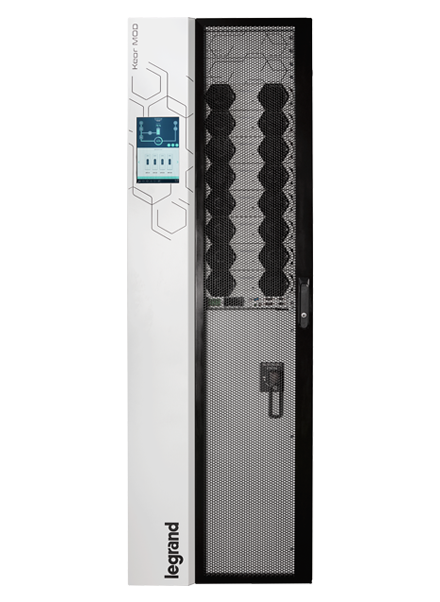
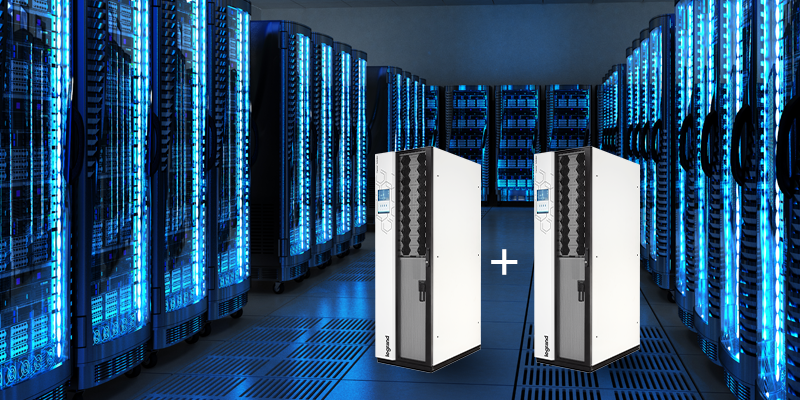
Capacity expansion shouldn't mean disrupting infrastructure that's already carrying live customer load. Modular parallel architecture scales to 4.8 MW - adding capacity and N+1 or N+X redundancy in live increments as demand grows, without disrupting existing infrastructure.
Capacity expansion shouldn't mean disrupting infrastructure that's already carrying live customer load. Modular parallel architecture scales to 4.8 MW - adding capacity and N+1 or N+X redundancy in live increments as demand grows, without disrupting existing infrastructure.
Protect high-density and AI-ready rack environments
AI training and inference loads spike faster than conventional compute ever did, and a slow transient response shows up as a power quality event on the rack. Online double-conversion topology with fast transient response maintains consistent power quality through rapid load changes - across high-density configurations and AI-loaded rack environments.
AI training and inference loads spike faster than conventional compute ever did, and a slow transient response shows up as a power quality event on the rack. Online double-conversion topology with fast transient response maintains consistent power quality through rapid load changes - across high-density configurations and AI-loaded rack environments.
Maintain availability during planned maintenance
In a data center, maintenance can't carry any downtime tolerance - customer SLAs don't have an exception clause for scheduled service. Hot-swappable power modules allow maintenance and module replacement to be carried out under live load, with no interruption to customer infrastructure or SLA commitments.
In a data center, maintenance can't carry any downtime tolerance - customer SLAs don't have an exception clause for scheduled service. Hot-swappable power modules allow maintenance and module replacement to be carried out under live load, with no interruption to customer infrastructure or SLA commitments.
Free up white space for revenue-generating capacity
Every square foot a UPS occupies is white space that isn't earning rack revenue. Compact modular UPS architecture reduces infrastructure footprint - freeing floor space that colocation operators can allocate to higher rack density.
Every square foot a UPS occupies is white space that isn't earning rack revenue. Compact modular UPS architecture reduces infrastructure footprint - freeing floor space that colocation operators can allocate to higher rack density.
UPS Solutions for different Data Centers
Colocation and enterprise data centers need UPS solutions that deliver consistent system behaviour at every stage of growth.
Isolate critical systems from grid disturbances
VFI online double-conversion topology with IGBT rectifiers delivers a clean, conditioned supply to ERP platforms, core banking systems, and enterprise IT infrastructure - fully decoupled from voltage instability, harmonics, and grid variation.
Identify failure risk before it affects operations
Battery Health Monitoring System (BHMS) provides continuous cell-level visibility into battery state. Remote diagnostics and predictive alerts surface degradation early - supported by 900+ field engineers and 225 service centres across India.
Expand backup capacity without infrastructure changes
Compact, high-efficiency UPS architecture increases backup capacity within existing IT rooms - without adding cooling load or requiring modifications to electrical distribution infrastructure.
Lower energy and cooling costs across IT infrastructure
Up to 96% efficiency in double-conversion mode reduces UPS losses and the cooling load they generate - lowering total operating costs across continuously running enterprise IT environments.
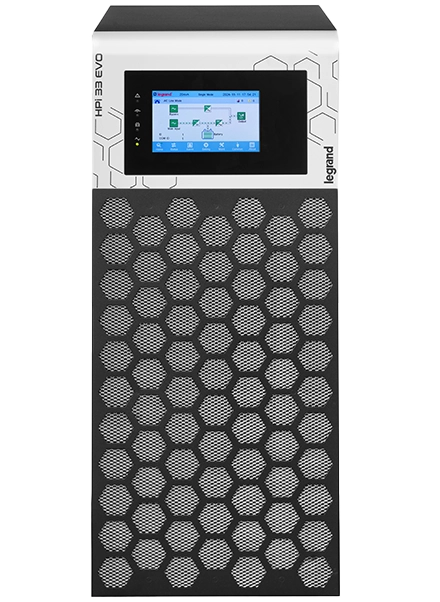
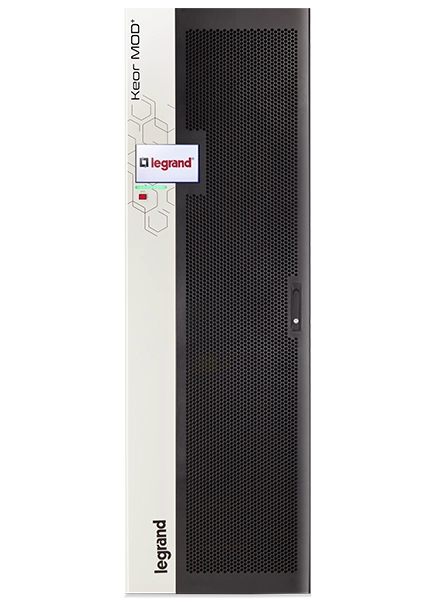
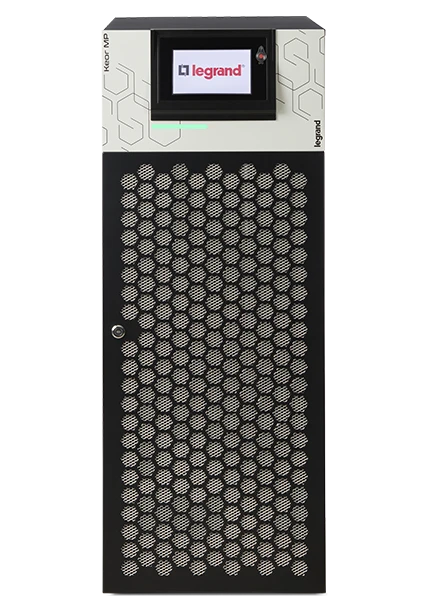
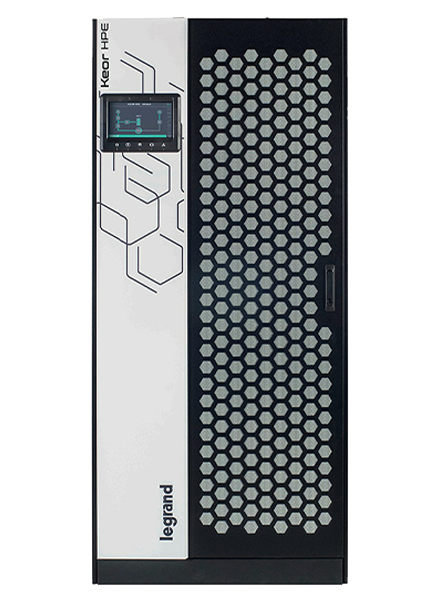
Explore three-phase UPS systems for data centers
Service at a Glance
When power continuity is vital to your business, service can't be an afterthought. Numeric's service portfolio keeps continuity uninterrupted across the system's full lifecycle - from initial installation to final upgrade.
40+
years serving critical power needs
92%
issues addressed within 60 mins
2M+
UPS Installations
250+
direct service centres
70%
airports
Related Resources
Embracing the Future: Lean Data Centres for Sustainable Growth
India • 26 Jun 2026
Choosing the Right UPS for Data Centers: Maximizing Uptime and Efficiency
India • 26 Jun 2026
FIS Global - When Every Millisecond Counts, Power Infrastructure Can't Lag Behind
India • 26 Jun 2026

Secure your Business with the right AMC for UPS system
India • 26 Jun 2026

Design for Growth. Operate With Predictability.
Numeric works with operators, consultants, and infrastructure leaders to shape UPS architectures for colocation, enterprise, and edge data center environments - with the focus on scalable redundancy, serviceability, and long-term power continuity.
Frequently Asked Questions
Numeric's modular UPS platforms allow capacity to be added incrementally within the existing frame - scaling kVA and redundancy without replacing the installed system or interrupting the live load. Enterprise environments can start with the load profile they have today and expand as their IT footprint grows, without changes to electrical distribution infrastructure.
Hot-swappable power module design means individual modules can be replaced or serviced under live load. Maintenance activity does not require a transfer to raw mains, and enterprise workloads remain on conditioned power throughout the service window - eliminating the need to schedule downtime for routine maintenance.
Numeric modular UPS systems support N+1 and N+X parallel redundancy configurations, allowing enterprises to match redundancy level to their operational risk tolerance. Finance and healthcare environments may require N+1 across all load zones; standard enterprise IT rooms can operate with a different profile at lower cost. Both are supported within the same modular platform.