Modular Scalability
Scaling power infrastructure is not just about adding capacity. It is about ensuring the system performs the same way at 4.8 MW as it did on day one.
Where Most UPS Systems Begin to Break Down
Capacity is the easy part. As infrastructure scales, the harder problems emerge. Voltage instability increases with load. Harmonic distortion compounds across a larger system. A fault that was contained at smaller scale propagates further. Redundancy that performed predictably at 500 kW behaves differently at 2 MW. A maintenance intervention that was routine becomes an operational dependency. These are not edge cases - they are what happens when a system designed for a fixed capacity is pushed beyond.
Faults travel further
What begins as a module-level event affects a wider part of the system
What begins as a module-level event affects a wider part of the system
Redundancy shifts under load
Redundancy behaviour at higher loads does not match what was designed or tested at commissioning
Redundancy behaviour at higher loads does not match what was designed or tested at commissioning
Maintenance creates risk
Service interventions introduce dependencies that affect live load in ways they did not at smaller scale
Service interventions introduce dependencies that affect live load in ways they did not at smaller scale
Complexity accumulates
Every expansion adds variables the original design did not account for
Every expansion adds variables the original design did not account for
Modular by architecture. Consistent by design.
Numeric's three-phase modular UPS solutions are designed so that the system behaves at 4.8 MW the way it behaves at initial deployment. Redundancy is predictable. Faults are contained. Maintenance does not touch live load. Capacity grows - the system does not become something different in the process.
Fault Isolation
Failures are confined within defined electrical and control boundaries. A module-level event stays a module-level event.
N, N+1, N+X Redundancy
Redundancy performance remains predictable at every load level and at every stage of expansion - not just at commissioning.
Live Serviceability
Service paths are separated from load paths. Hot swappability allows modules to be replaced or upgraded while the system remains fully operational.
Capacity on Demand
Additional modules are added as load grows - without redesign, without reconfiguration, without operational disruption.
Trusted in the most demanding operating conditions
Numeric three-phase modular UPS solutions support multi-megawatt deployments where expansion cannot compromise live operations.
Data Center
Scaling capacity in line with IT load growth without redesign or downtime
Healthcare
Maintaining availability through expansion where interruption is not acceptable
IT & ITes
Supporting phased growth without adding risk to the power continuity architecture
Manufacturing
Managing capacity changes in high-demand industrial facilities without affecting production continuity
Infrastructure
Reliable power continuity for critical public and commercial infrastructure across India.
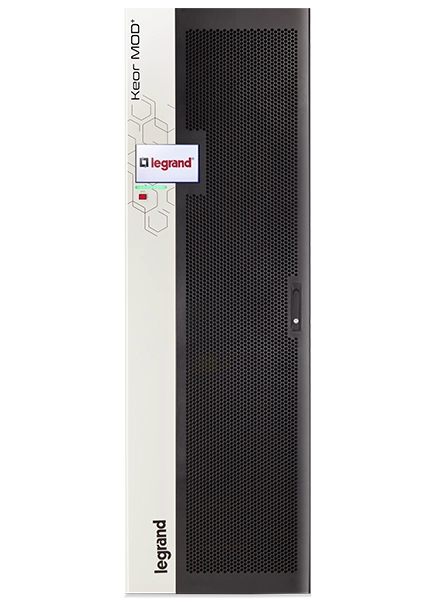
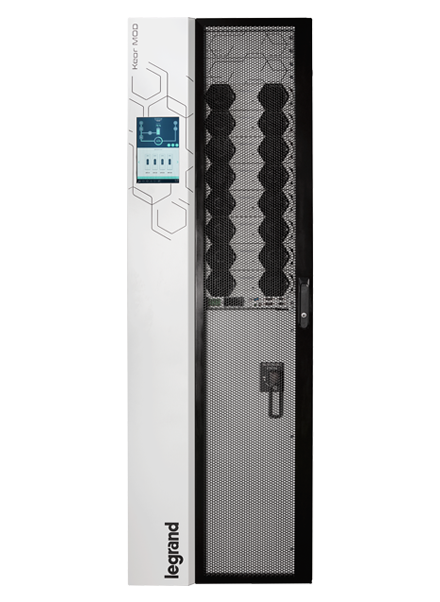
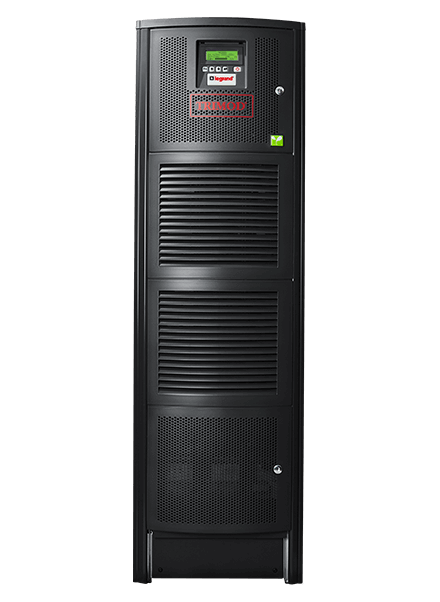
Explore Three-Phase MODULAR UPS SOLUTIONS





Contact Us
Need help in designing your power continuity infrastructure?
Frequently Asked Questions
A modular UPS scales capacity using independent power modules that can be added incrementally - without system redesign or operational disruption - while maintaining continuous uptime and predictable performance throughout.
Numeric's modular architecture is designed so that fault isolation, redundancy behaviour, and serviceability perform the same at full scale as at initial deployment. Expanding capacity does not change how the system works.
Yes. Numeric separates service paths from load paths, allowing capacity additions and module replacements while the system remains fully operational - no maintenance window required.
Capacity is deployed in line with actual load growth. Capital is committed incrementally rather than upfront - eliminating the cost of over-provisioning and the efficiency penalty of operating a large system at sustained low load.
Numeric's modular architecture adds capacity without adding architectural variables. The protection logic and redundancy configuration do not change as modules are added - complexity does not accumulate with scale.
A traditional UPS is sized at installation - expansion typically means new equipment, redesign, or a service window. A modular system grows within the existing architecture, adding capacity without disrupting live operations or introducing new system behaviour.
Data centre load growth is rarely predictable or linear. Modular UPS lets capacity track actual IT load - without over-provisioning at deployment, without redesign at expansion, and without compromising availability standards at any stage of growth.